
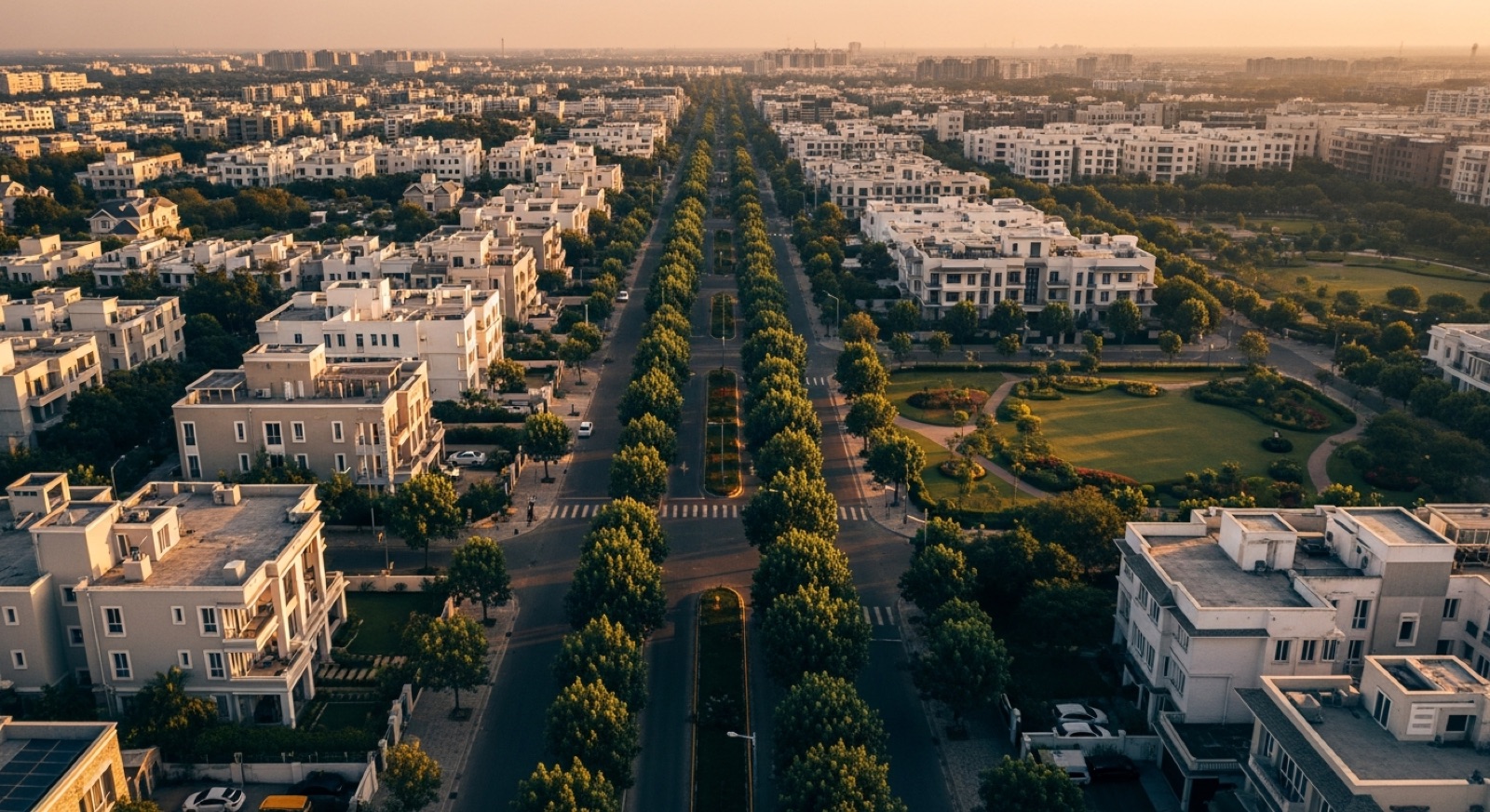
The Navi Mumbai Airport Effect: Investing in Property Around a Catalyst
Few infrastructure projects have reshaped a property market's prospects the way the new airport has for Navi Mumbai. For years, Navi Mumbai's growth corridors — Kharghar, Ulwe, Panvel, Dronagiri and the surrounding nodes — have been talked about in terms of "airport-led" appreciation, as buyers and investors positioned themselves ahead of a transport catalyst of enormous significance. Now that the airport is a reality, understanding how it affects property across Navi Mumbai — and, crucially, how to invest around it sensibly rather than on hype — matters more than ever. This guide takes a practical look at the airport's impact on Navi Mumbai property.
We cover why the airport matters, which areas are most affected, how infrastructure-led growth actually works, the investment case and its risks, and how to buy sensibly around a major catalyst. The enthusiasm around airport-driven appreciation is real, but so is the need for discipline — this guide aims to help you benefit from the former without falling for the latter.
Why the airport matters
A major new airport is a transformational piece of infrastructure. It brings connectivity, jobs, commercial activity and a wave of supporting development — hotels, offices, logistics, retail and housing — to its surrounding region, and it reshapes how the wider metropolitan area is organised. For Navi Mumbai, which was planned as a counter-magnet to Mumbai and has long had strong fundamentals (planned nodes, good internal infrastructure, the CIDCO-planned framework), the airport adds a powerful new anchor. Combined with the region's other transport links — rail, road, the coastal and trans-harbour connections, and metro developments — it strengthens Navi Mumbai's case as a growth region in its own right.
Which areas are most affected
The airport's influence is strongest in the nodes closest to it and along its access corridors. Areas like Ulwe, Panvel, Dronagiri and the surrounding growth nodes have been closely associated with airport-led development, given their proximity and connectivity to the airport and the supporting infrastructure. Established nodes like Kharghar also benefit from the broader uplift in the region's connectivity and desirability. The general principle is that proximity and connectivity to the airport, and to the jobs and activity it generates, drive the strongest impact — but the specifics vary node by node, which is why local, project-level judgement matters.
Explore Navi Mumbai's growth corridors
Being Real Estate lists RERA-checked, owner-verified properties across Navi Mumbai's nodes.
How infrastructure-led growth actually works
It helps to be realistic about how a catalyst like an airport translates into property value. Infrastructure-led appreciation is real, but it typically works over time and in stages: anticipation drives early positioning, delivery and the arrival of jobs and activity consolidate the gains, and the full benefit accrues as the surrounding ecosystem matures. Some appreciation is often already priced in by the time a catalyst is delivered, and the pace of further gains depends on the actual arrival of employment, commercial activity and supporting infrastructure. The lesson is to buy on fundamentals and a realistic view of the timeline, not on the assumption that proximity alone guarantees rapid, guaranteed gains.
The investment case
- A transformational anchor: a major airport reshapes the region's connectivity, jobs and desirability over the long term.
- Strong underlying fundamentals: Navi Mumbai's planned framework and existing infrastructure give the airport effect a solid base.
- Multiple transport catalysts: the airport works alongside rail, road, harbour links and metro developments to strengthen the region.
- A long runway of maturing: as the surrounding ecosystem develops, well-chosen locations can benefit over an extended horizon.
As always, returns depend on the specific node, project, price and timing — and, here especially, on how much of the upside is already reflected in current prices.
The risks to manage
Buying around a major catalyst carries specific risks worth naming. Prices may already reflect significant anticipation, limiting near-term upside. Timelines for the full benefit — the arrival of jobs, commercial activity and complete infrastructure — can be longer than optimistic narratives suggest. Some projects in fast-growing corridors carry execution and delivery risk, and infrastructure maturity varies pocket to pocket. And the enthusiasm around a catalyst can attract hype and inflated claims. None of this negates the opportunity — it argues for discipline: buy well-located, well-documented projects at sensible prices, with a realistic time horizon.
Invest around the airport, sensibly
Use our valuation and EMI tools, and verified listings, to judge opportunities on the numbers.
How to buy sensibly around a catalyst
- Choose the node carefully based on genuine proximity and connectivity to the airport and to jobs, not just the "airport" label.
- Verify RERA registration on the MahaRERA portal and the developer's track record — vital in fast-growing corridors.
- Assess how much upside is already priced in and take a realistic view of the timeline.
- Confirm infrastructure reality — roads, water, transport actually in place or credibly coming — for the specific project.
- Do full title, approvals and OC due diligence through an independent lawyer.
- Buy on carpet-area pricing and run the complete cost, holding for a realistic horizon.
Beyond the airport: Navi Mumbai's broader case
While the airport is the headline catalyst, it is worth remembering that Navi Mumbai's appeal rests on more than one project. Its planned framework, relative affordability compared with much of Mumbai, improving connectivity across multiple modes, and its role as a growth region in the wider metropolitan area all contribute. The airport strengthens and accelerates this story, but the underlying case for well-chosen Navi Mumbai property does not rest on the airport alone. Buyers who understand both the catalyst and the broader fundamentals are best placed to invest wisely.
The bottom line
The new airport is a genuinely transformational catalyst for Navi Mumbai, strengthening a region that already had strong planned fundamentals and multiple transport links, and it has driven — and will continue to drive — interest across nodes like Ulwe, Panvel, Dronagiri and Kharghar. But infrastructure-led appreciation works over time and in stages, with some upside often already priced in and full benefits depending on the real arrival of jobs and activity. The smart approach is to benefit from the catalyst without falling for the hype: choose nodes on genuine connectivity, verify RERA and the developer, take a realistic view of pricing and timelines, do full due diligence, and buy well-documented projects at sensible prices. Do that, and the airport's uplift becomes an opportunity you have positioned for soundly, rather than a story you have overpaid for.
Position for Navi Mumbai's growth, the right way
Browse verified, RERA-checked listings across Navi Mumbai's nodes with transparent pricing on Being Real Estate.
Search Navi Mumbai homes · Plan your EMI · Talk to our team.
Frequently asked questions
How does the new airport affect Navi Mumbai property?+
A major airport is transformational infrastructure — it brings connectivity, jobs, commercial activity and supporting development (hotels, offices, logistics, retail, housing) to its region and reshapes how the metropolitan area is organised. For Navi Mumbai, which already had strong planned fundamentals, the airport adds a powerful anchor and, alongside rail, road, harbour links and metro, strengthens its case as a growth region and lifts property prospects.
Which Navi Mumbai areas benefit most from the airport?+
The influence is strongest in the nodes closest to the airport and along its access corridors — Ulwe, Panvel, Dronagiri and the surrounding growth nodes have been closely associated with airport-led development, and established nodes like Kharghar benefit from the broader uplift. Proximity and connectivity to the airport and the jobs it generates drive the strongest impact, but specifics vary node by node.
Is it too late to invest around the Navi Mumbai airport?+
Not necessarily, but be realistic. Infrastructure-led appreciation works over time and in stages: anticipation drives early positioning, delivery consolidates gains, and full benefits accrue as the ecosystem matures. Some upside is often already priced in by delivery, and further gains depend on the actual arrival of jobs and activity. Buy on fundamentals and a realistic timeline, not on the assumption that proximity guarantees rapid gains.
What are the risks of buying around the airport?+
Prices may already reflect significant anticipation, limiting near-term upside; timelines for the full benefit can be longer than optimistic narratives suggest; some projects carry execution and delivery risk, and infrastructure maturity varies pocket to pocket; and the enthusiasm attracts hype and inflated claims. This argues for discipline — buy well-located, well-documented projects at sensible prices with a realistic horizon.
How do I buy sensibly around a major infrastructure catalyst?+
Choose the node on genuine proximity and connectivity to the airport and jobs, not just the 'airport' label; verify RERA registration on MahaRERA and the developer's track record; assess how much upside is already priced in and take a realistic view of the timeline; confirm infrastructure is actually in place or credibly coming; do full title, approvals and OC due diligence; and buy on carpet-area pricing, holding for a realistic horizon.
Keep reading
 Location Guide
Living in Whitefield, Bangalore: Tech Parks, Metro & Property Guide (2026)
A practical guide to living in and buying property in Whitefield, Bengaluru — tech parks, the metro, lifestyle, who it suits, the investment case, and what to check before you buy.
 Location Guide
Living in Wakad, Pune: Hinjewadi Proximity, Lifestyle & Property Guide (2026)
A practical guide to living in and buying property in Wakad, Pune — Hinjewadi proximity, connectivity, lifestyle, who it suits, the investment case, and what to check before you buy.
 Location Guide
Living in Ulwe, Navi Mumbai: 2026 Area & Investment Guide
A practical guide to living in and buying property in Ulwe — the Atal Setu and airport-driven investment case, connectivity, the reality of an emerging node, and what to check.